
Collision Center 1 Prior Lake is sharing consumer guidance explaining how low-speed collisions can affect vehicle liftgates and surrounding rear body structures. The November guidance addresses visible and concealed damage, changes in liftgate operation, and the inspections that may be necessary before a repaired SUV or crossover is returned to regular use.
Low-speed rear-end collisions and parking lot impacts can cause damage that extends beyond the most noticeable exterior dents or scratches. Liftgates are connected to surrounding body openings, hinges, latches, and, in some vehicles, electronic opening systems. An impact affecting these areas may change how the liftgate fits, closes, or operates.
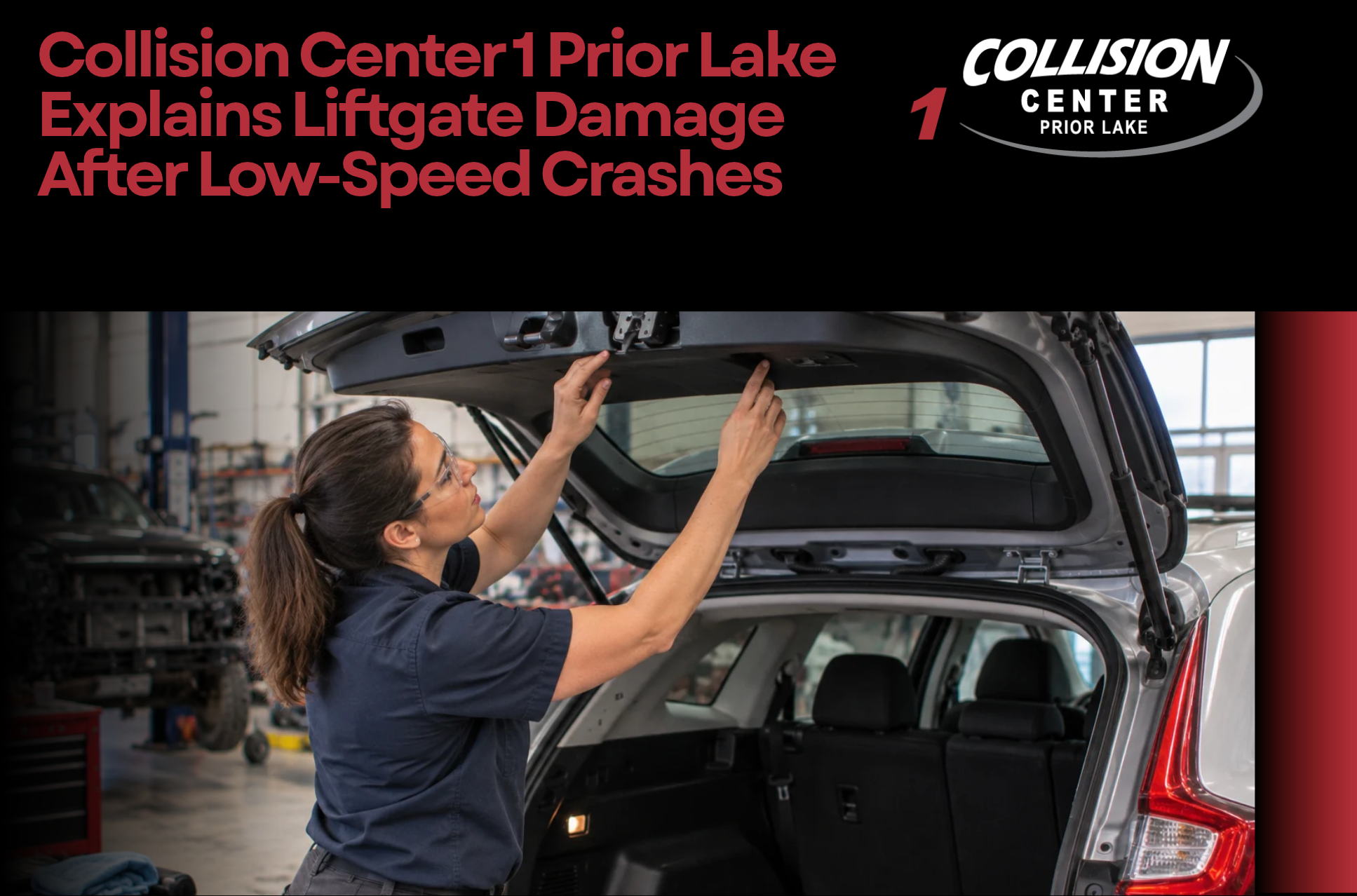
The guidance identifies three considerations when evaluating liftgate damage after a minor collision: recognizing changes in operation, inspecting concealed damage, and verifying completed repairs. These considerations explain why a liftgate that appears largely intact may still require professional assessment.
One indication of possible damage is a change in how the liftgate opens or closes. Vehicle owners may notice uneven gaps around the rear opening, increased resistance during closing, or difficulty engaging the latch. Some liftgates may also sit unevenly relative to adjacent rear body panels.
Vehicles equipped with powered liftgates can present additional concerns following an impact. Depending on the damage, affected hinges, mounting points, wiring, or electronic components may interfere with powered opening and closing functions. These conditions require evaluation based on the vehicle's design and applicable manufacturer instructions.
Collision Center 1 Prior Lake provides auto body repair services for vehicles with accident-related exterior damage. Professional assessments help determine whether liftgate alignment concerns involve the closure itself, its mounting components, or the surrounding body opening.
Another consideration involves damage concealed beneath exterior surfaces. Rear-end impacts can affect reinforcement structures, attachment points, and adjacent body areas without creating extensive visible damage. These conditions may become apparent only after additional inspection or removal of affected components.
For example, a low-speed collision may leave a small dent near the rear bumper while changing the position of a nearby mounting area. The resulting distortion can affect liftgate alignment even when the liftgate panel shows little visible damage. Evaluating the surrounding structure helps identify whether adjustments alone are sufficient.
Simply repositioning a liftgate may not correct an alignment problem caused by damaged body structures. When the rear opening or mounting areas have shifted, the affected components may require repair, replacement, or measurement before final alignment adjustments are completed. The appropriate procedure depends on the vehicle and the damage identified.
Collision Center 1 also provides collision repair services addressing accident-related damage that may involve exterior panels and underlying structures. Additional inspections can help establish the full scope of repairs when the initial damage assessment does not reveal every affected area.
Liftgate damage may also influence weather sealing around the rear cargo opening. Uneven gaps, distorted sealing surfaces, or damaged weatherstripping can create openings that allow moisture or road debris to enter the cargo compartment. These conditions may become more noticeable during rain, snow, or vehicle washing.
For Prior Lake drivers, Minnesota's changing weather conditions make the condition of rear body openings particularly relevant. Snow, moisture, and road deicing materials can contact damaged surfaces or areas where protective coatings have been disturbed. Applicable repair procedures may include refinishing or corrosion protection for affected metal surfaces.
Modern SUVs and crossovers may also contain electronic equipment near the rear body area. Depending on the vehicle, rear impacts can affect parking assistance sensors, cameras, or components associated with other driver-assistance technologies. Manufacturer procedures determine whether additional diagnostic inspections or calibration operations are necessary.
Diagnostic scanning and calibration are separate procedures. Scanning can identify certain electronic system conditions, while calibration follows manufacturer-defined steps to establish or verify the operating parameters of applicable sensors. Not every low-speed collision requires these operations, and their necessity depends on the vehicle and repairs performed.
Repair planning can change when concealed damage is discovered during disassembly. An initial estimate may identify visible liftgate or bumper damage, while subsequent inspections reveal affected mounting areas or surrounding components. Supplemental documentation can explain additional repairs and any resulting changes to the anticipated completion date.
The final consideration involves verifying liftgate operation after repairs. Depending on the damage, inspections may include checking panel gaps, hinge positioning, latch engagement, weather seals, and normal opening and closing movement. Powered liftgates may require additional functional checks or manufacturer-specified procedures when relevant components have been repaired or replaced.
A liftgate that closes properly after adjustment does not independently establish that every collision-related condition has been resolved. Final verification should reflect the affected body areas and the specific repairs performed. Structural, mechanical, or electronic concerns may require separate checks when applicable.
Not every low-speed impact requires extensive liftgate repairs or structural correction. Some damage may be limited to exterior surfaces, while other collisions can affect mounting points or rear body geometry. A professional damage assessment helps determine the appropriate scope of work.
Collision Center 1 provides information about its local repair facility through the Prior Lake location page. Located at 16111 Main Ave SE, the facility serves drivers in Prior Lake and surrounding Minnesota communities.
The November guidance emphasizes that liftgate damage should be evaluated according to the condition of the entire rear opening rather than the visible panel alone. Recognizing operational changes, identifying concealed damage, and completing applicable final inspections contribute to the collision repair process.
About Collision Center 1 Prior Lake
Collision Center 1 Prior Lake is an auto body and collision repair facility located at 16111 Main Ave SE, Prior Lake, MN 55372. The location provides auto body repair, collision repair, paint refinishing, and related vehicle restoration services for drivers in Prior Lake and surrounding Minnesota communities. As part of Collision Center 1, the facility addresses accident-related damage according to vehicle-specific assessments and applicable manufacturer repair procedures.
###
For more information about Collision Center 1 Prior Lake, contact the company here:
Collision Center 1 Prior Lake
Jerald Stiele
(952) 447-4259
layres@collisioncenter1.com
16111 Main Ave SE, Prior Lake, MN 55372
