
Collision Care Xpress is providing consumer guidance explaining how collision repair technicians assess visible and hidden vehicle damage following an accident. The November publication outlines the role of vehicle inspections, controlled disassembly, structural evaluations, and electronic system diagnostics in developing a complete repair plan.
The guidance addresses a common concern among vehicle owners: why an initial repair estimate may change after a vehicle enters the repair facility. According to Collision Care Xpress, certain types of collision damage cannot be fully evaluated until technicians gain access to components concealed beneath exterior panels.
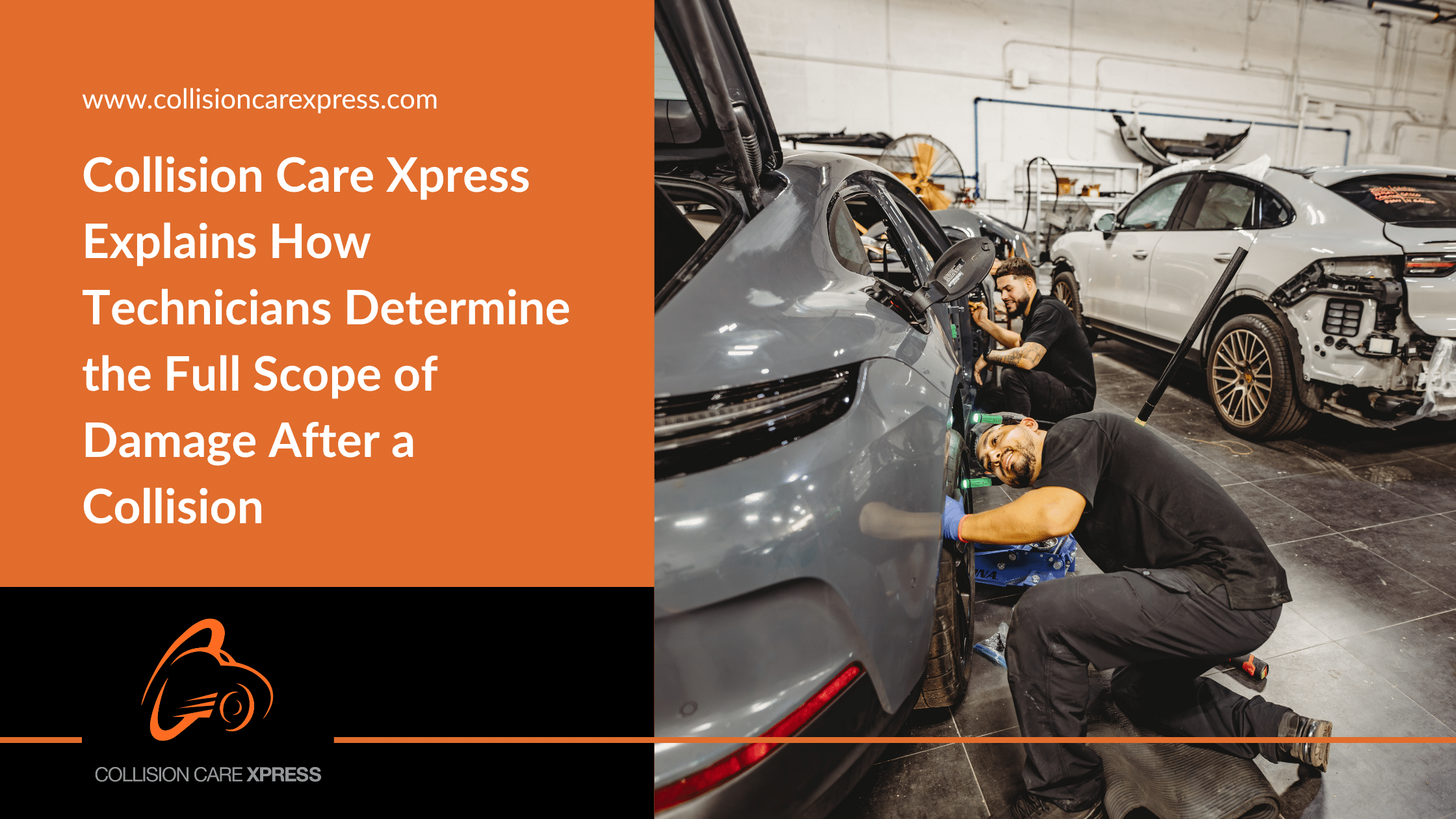
Collision Care Xpress provides collision repair services for drivers in Daytona Beach and surrounding Volusia County communities. The company explains that identifying the full extent of accident-related damage requires a systematic assessment based on vehicle condition, collision circumstances, and applicable manufacturer repair procedures.
An initial inspection typically begins with documenting visible damage, including affected body panels, bumpers, lighting assemblies, and exterior attachment points. Technicians may use photographs and written estimates to record their findings and identify areas requiring further investigation.
However, exterior damage does not always reveal the condition of underlying components. Modern bumper assemblies, for example, can contain reinforcement structures, energy-absorbing materials, sensor mounts, and other components that may be affected during an impact.
The November guidance explains that controlled disassembly allows repair professionals to examine areas that cannot be adequately assessed during an initial visual inspection. Removing selected damaged components can reveal broken mounting points, distorted supports, or additional damage that requires inclusion in the repair plan.
Through its auto body repair services, Collision Care Xpress addresses damaged exterior panels and related components. The company emphasizes that repair planning must also consider surrounding structures and any manufacturer-required inspections associated with the collision.
Structural evaluations may be necessary when an impact affects vehicle alignment, attachment points, or areas designed to manage collision forces. Depending on the vehicle and damage severity, technicians may use measurements and manufacturer specifications to determine the appropriate repair approach.
Collision damage near a wheel may also require inspection of suspension and steering components. These evaluations can help identify conditions that are not immediately apparent from damaged exterior panels alone.
The publication further explains how electronic safety systems influence modern collision damage assessments. Many vehicles contain advanced driver assistance systems, commonly known as ADAS, that use cameras, radar sensors, and electronic control modules to support functions such as automatic emergency braking and lane assistance.
Depending on the vehicle and affected components, manufacturers may specify diagnostic scanning, inspections, or calibration procedures following certain collisions. The absence of dashboard warning lights does not necessarily eliminate the need to review applicable manufacturer requirements.
Collision Care Xpress addresses these considerations through its ADAS repair services. The guidance distinguishes diagnostic scanning, which can identify certain electronic faults, from calibration procedures used to establish or verify the operating parameters of affected sensors and cameras.
The specific procedures required depend on the vehicle's make, model, installed equipment, and repair operations. Not every collision requires the same diagnostic or calibration work, making manufacturer-specific information an important part of the assessment.
Collision Care Xpress also explains how newly discovered damage can affect repair estimates. When additional damage becomes visible during disassembly, technicians may prepare supplemental documentation identifying the findings and necessary repair operations.
For insurance-related repairs, supplemental estimates may be submitted to the insurer for review. Coverage and payment decisions remain subject to the applicable insurance policy and claim circumstances.
The guidance notes that a supplemental estimate does not automatically indicate an error in the original assessment. Some conditions cannot be confirmed until obstructing components have been removed or additional inspections have been completed.
The company also encourages vehicle owners to understand how new findings may affect repair scheduling. Additional inspections, replacement components, structural procedures, or required electronic calibrations can influence the order and duration of repair operations.
Collision Care Xpress recommends that drivers ask how hidden damage will be documented, whether manufacturer procedures will be reviewed, and how additional repair requirements will be communicated. These discussions can help vehicle owners better understand why a complete evaluation may involve multiple inspection stages.
The November guidance emphasizes that collision damage assessment extends beyond identifying visible dents and damaged panels. A complete repair plan may require evaluating underlying structures, related mechanical components, and electronic safety systems before restoration work is finalized.
Collision Care Xpress provides collision repair, auto body repair, and ADAS-related services in Daytona Beach, Florida. The company serves vehicle owners throughout Daytona Beach and surrounding Volusia County communities, with an emphasis on damage assessment, manufacturer repair requirements, and repair process communication.
###
For more information about Collision Care Xpress - Daytona Beach, contact the company here:
Collision Care Xpress - Daytona Beach
Robert Molina
386-267-0904
dbservice@collisioncarexpress.com
418 N Segrave St, Daytona Beach, FL 32114
