
Carriage Shoppe, part of Yoder Collision Network, is providing new consumer guidance to help Northern Colorado drivers understand the documents involved in professional collision repair. The November publication explains five important types of repair records: initial estimates, supplemental estimates, manufacturer repair procedures, parts documentation, and final inspection records. The guidance is intended to help vehicle owners better understand what repairs were recommended, why certain operations were necessary, and which records they should retain after an accident.
Collision repair documentation can be difficult to interpret, particularly for drivers navigating an insurance claim for the first time. Repair estimates may contain technical terminology, labor categories, part descriptions, and additional operations that are unfamiliar to vehicle owners. As repairs progress, new information may also become available, resulting in revised estimates and additional documentation.
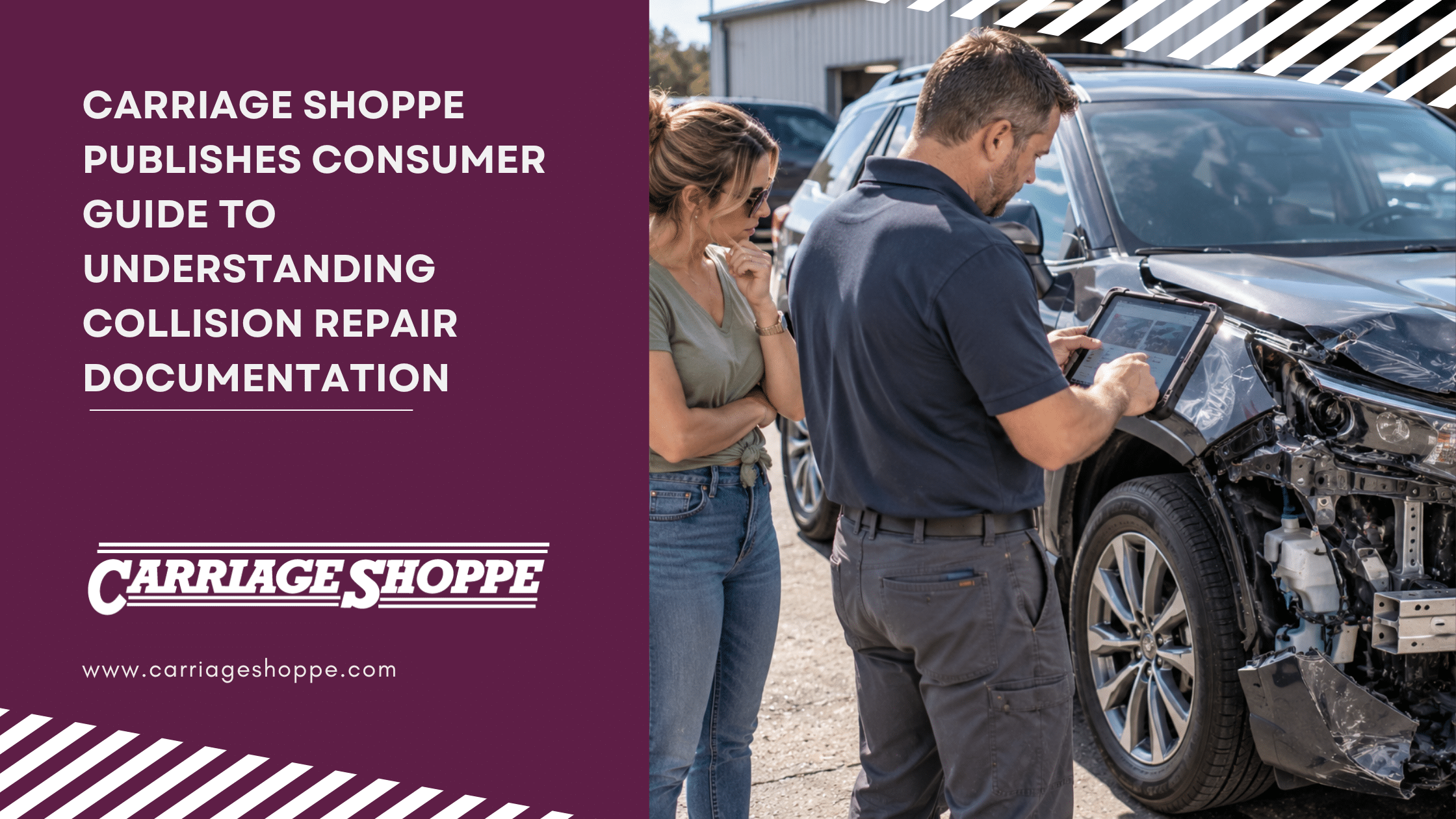
Carriage Shoppe provides collision repair services through Yoder Collision Network. Its November consumer guidance addresses common questions about repair paperwork and explains how accurate records support communication between vehicle owners, repair facilities, and insurance companies.
The first document drivers typically encounter is the initial collision repair estimate.
An estimate outlines the damage identified during the preliminary assessment and the proposed operations needed to address it. Depending on the vehicle and accident, the document may include labor charges, replacement components, refinishing operations, materials, and other repair-related expenses.
However, an initial estimate is not always a complete representation of the final repair requirements.
Some collision damage remains concealed beneath bumper covers, interior trim, exterior panels, or other components. Technicians may need to remove these parts before determining whether additional repairs are necessary.
The November guidance encourages drivers to review estimates carefully and ask questions about unfamiliar terminology or recommended operations.
Vehicle owners should understand which areas of the vehicle were evaluated, what work is being proposed, and whether further inspection could reveal additional damage.
The second important category involves supplemental repair estimates.
A supplement documents additional damage or repair operations identified after the initial assessment. These changes may become necessary when technicians discover concealed damage during disassembly or identify manufacturer-required procedures that were not included in the original estimate.
For example, a vehicle with visible rear bumper damage may also have affected reinforcement components, mounting brackets, or other parts that cannot be fully evaluated until the bumper assembly is removed.
A supplemental estimate can identify the newly discovered conditions, explain the additional work, and document changes to the anticipated repair cost.
Carriage Shoppe emphasizes that supplemental estimates are a normal part of many collision repairs and do not automatically indicate that the initial assessment was performed incorrectly.
The purpose of the supplement is to update the repair plan as additional information becomes available.
Insurance companies may review supplemental documentation according to the applicable policy and claim circumstances. Vehicle owners should ask how changes will be communicated and whether additional operations could affect the expected completion date.
The third category involves manufacturer repair procedures.
Modern vehicles are constructed using different materials, joining methods, electronic systems, and structural designs. Repair methods can vary significantly between manufacturers and even between models produced by the same company.
Manufacturer repair information may specify whether a damaged component can be repaired, whether replacement is required, and which tools or procedures must be used.
These instructions may also address structural measurements, approved welding or bonding methods, corrosion protection, and electronic system requirements.
Through its OEM certification information, Yoder Collision Network provides additional context about manufacturer-specific collision repair standards.
The November guidance encourages drivers to ask whether applicable manufacturer procedures were consulted during repair planning and whether any required operations were documented.
This information can be especially important when structural components or vehicle safety systems have been affected.
The fourth category involves parts and repair operation documentation.
Collision repair records may identify whether a damaged component was repaired or replaced and describe the parts selected for installation.
Depending on the repair plan and applicable requirements, replacement components may include original equipment manufacturer parts or other parts approved for the particular repair circumstances.
Vehicle owners should understand the differences between proposed parts and ask how the repair facility determines whether a component is appropriate for their vehicle.
Documentation may also identify refinishing operations, protective coatings, seam sealers, and other materials used during repairs.
These details help explain the work performed beyond the most visible exterior repairs.
For Colorado drivers, corrosion protection can be particularly relevant because vehicles may encounter snow, moisture, and winter road treatments.
When manufacturer procedures require protective materials to be restored, those operations should be considered during repair planning and documented as appropriate.
The fifth category involves diagnostic and final inspection records.
Many newer vehicles contain electronic control modules, cameras, radar sensors, and Advanced Driver Assistance Systems, commonly known as ADAS.
These systems may support automatic emergency braking, lane-keeping assistance, adaptive cruise control, and other driver-assistance functions.
Following certain collisions or repair operations, vehicle manufacturers may require diagnostic scanning, component inspections, or calibration procedures.
A diagnostic scan can retrieve information about electronic system conditions, while calibration involves following manufacturer-defined procedures to establish or verify the operating parameters of applicable cameras and sensors.
These are separate operations, and a completed diagnostic scan does not necessarily satisfy a manufacturer's calibration requirements.
The November publication explains that drivers should ask whether their vehicles required electronic system evaluations and whether the completed procedures were recorded.
Final inspection documentation may also identify checks involving panel alignment, lighting, component operation, structural measurements, or other conditions relevant to the completed repairs.
The specific inspections depend on the vehicle and the work performed.
Carriage Shoppe encourages vehicle owners to request an explanation of the final repair documentation before accepting their vehicles. Drivers can also learn more about the company's approach to auto body repair and how repair planning, damage assessments, and quality inspections contribute to the overall collision repair process.
The guidance also addresses the relationship between repair records and insurance communication.
An insurance estimate and a repair facility's recommended operations may not always match. Differences can result from inspection timing, newly discovered damage, parts selection, or manufacturer-specific requirements.
Repair documentation helps identify these differences and provides information that can be reviewed during the claims process.
Insurance coverage decisions remain subject to the applicable policy and claim circumstances, while the technical repair plan should account for the procedures required for the damaged vehicle.
Drivers should retain copies of their final invoice, relevant repair estimates, warranty information, and any diagnostic or calibration records provided.
These documents may be useful when reviewing completed work, discussing future vehicle concerns, or answering questions about previous collision repairs.
For Northern Colorado vehicle owners, the central takeaway is that collision repair documentation serves a purpose beyond explaining the final bill.
Estimates describe proposed repairs, supplements identify additional findings, manufacturer procedures guide technical decisions, parts records describe the components used, and final inspections help document completed verification activities.
Understanding these records allows drivers to ask informed questions and follow the repair process with greater clarity.
Carriage Shoppe's November consumer guidance is intended to help Fort Collins and surrounding Northern Colorado drivers recognize the importance of transparent repair documentation and understand what information may be available throughout the collision repair process.
Carriage Shoppe is part of Yoder Collision Network, which provides auto body repair, collision repair, paintless dent repair, fleet collision repair, and related vehicle restoration services in Northern Colorado. Through its Carriage Shoppe, ABRA Fort Collins, and ABRA Greeley locations, the network serves drivers seeking professional collision repair and vehicle restoration services.
###
For more information about Carriage Shoppe, contact the company here:
Carriage Shoppe
Micah
970 482 3597
officestaff@carriageshoppe.com
327 S Link Ln, Fort Collins, CO 80524
