
All County Collision is publishing consumer guidance explaining how a vehicle's accident history can influence its resale or trade-in value even after collision repairs have been completed. The November publication focuses on diminished value, the role of repair documentation, and what Florida drivers should understand when evaluating their vehicle's long-term market value following an accident.
A vehicle can be professionally repaired after a collision and still face questions from prospective buyers or dealerships about its accident history. These concerns may influence how much someone is willing to pay, depending on the vehicle's age, condition, damage severity, and available repair records.
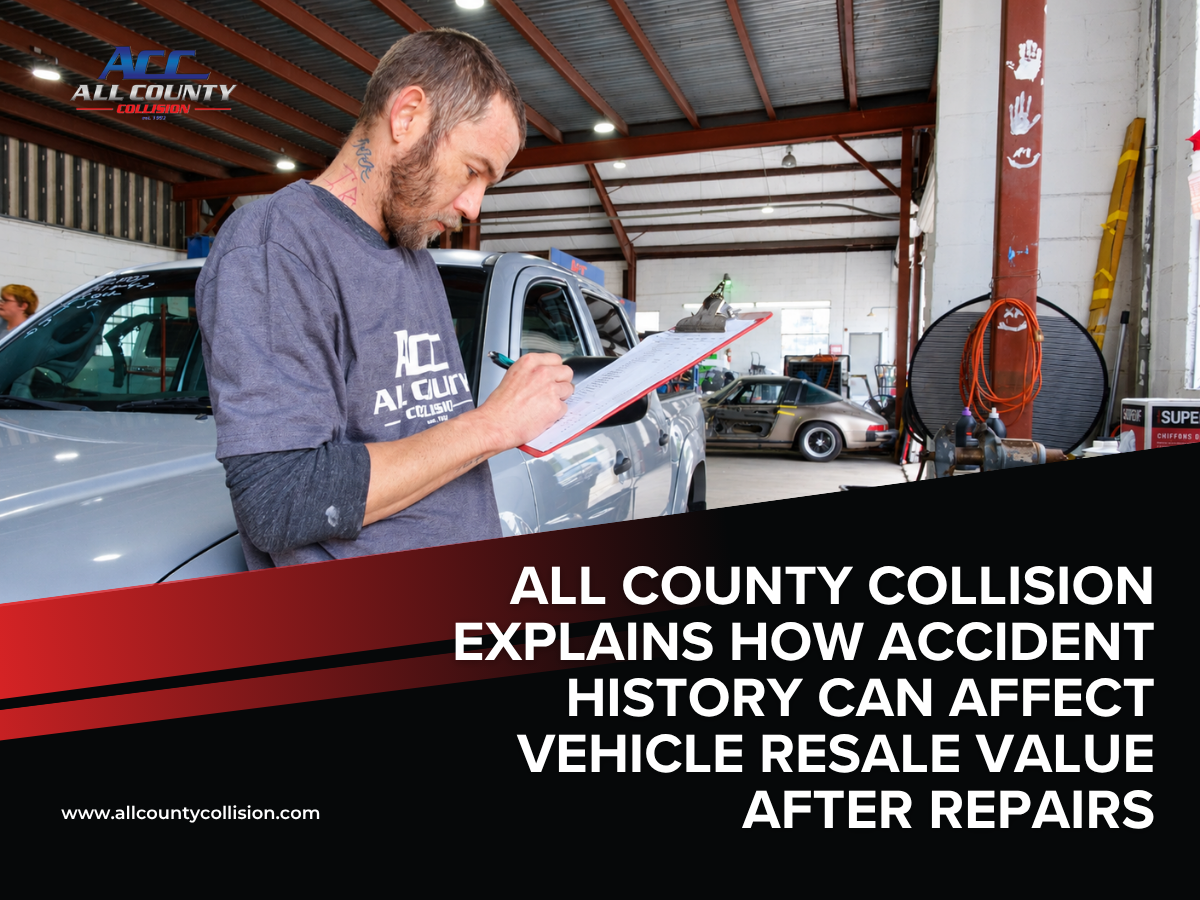
All County Collision provides collision repair services for drivers in Eustis and surrounding Central Florida communities. The new guidance explains why restoring a vehicle's condition and maintaining its market value are related but separate considerations.
The November publication introduces diminished value as a potential reduction in a vehicle's market value associated with its accident history. Even when repairs have restored the vehicle's appearance and addressed identified damage, buyers may compare it differently with a similar vehicle that has no reported accident history.
This does not mean every repaired vehicle experiences the same reduction in value. Market conditions, vehicle demand, mileage, prior ownership history, and the extent of the accident can all influence the outcome.
The guidance identifies three important factors that may affect resale value after collision repairs: the nature of the original damage, the quality and documentation of completed repairs, and the information available to future buyers.
The first factor involves the severity and location of the collision damage. Minor cosmetic damage may be evaluated differently from an accident involving structural components, extensive body repairs, or important vehicle safety systems.
However, the visible appearance of a repaired vehicle does not necessarily reveal the original extent of the damage. Buyers may review accident reports, vehicle history information, inspection findings, and repair records when assessing a previously damaged vehicle.
The second factor involves how repairs were completed and documented. Through its auto body repair services, All County Collision addresses damaged exterior panels and related components as part of the broader repair process.
The November guidance explains that repair documentation can provide useful context when a vehicle owner later decides to sell or trade in a vehicle. Detailed estimates, completed repair invoices, photographs, and records of relevant inspections can help explain what work was performed.
These documents may also help distinguish repaired collision damage from unresolved mechanical, structural, or cosmetic concerns. Although documentation cannot guarantee a particular resale value, it can provide information that prospective buyers or vehicle appraisers may consider.
Modern vehicle technology introduces another consideration. Cars equipped with Advanced Driver Assistance Systems (ADAS) may require diagnostic evaluations or manufacturer-specified calibration procedures following certain collision repairs.
Cameras, radar sensors, and related equipment can support features such as automatic emergency braking, lane-keeping assistance, and adaptive cruise control. Depending on the vehicle and repair operations, the manufacturer may require additional procedures to evaluate or calibrate these systems.
All County Collision provides information about these requirements through its ADAS calibration services.
The guidance notes that records of required electronic system procedures can be relevant when documenting a vehicle's repair history. A prospective buyer may want to understand whether safety-related components affected by the accident were evaluated according to applicable manufacturer requirements.
However, completing ADAS calibration does not automatically eliminate diminished value. Calibration addresses specific technical requirements, while resale value depends on broader market considerations and the vehicle's history.
The third factor involves the information available to future buyers. Vehicle history reports may contain accident-related information obtained from insurers, repair facilities, law enforcement agencies, or other reporting sources.
The availability and completeness of this information can vary. A vehicle history report may not describe every repair operation or establish the current condition of the vehicle.
For that reason, the November publication encourages drivers to retain their own repair records rather than relying exclusively on third-party vehicle history reports.
The guidance also distinguishes diminished value from the cost of repairing accident damage. Repair costs address the work needed to restore the vehicle, while diminished value concerns a potential difference in market value associated with the accident.
Florida drivers considering a diminished value claim should understand that eligibility depends on the circumstances of the accident, the responsible parties, and applicable insurance or legal requirements.
A potential third-party claim against an at-fault driver is different from a claim under the vehicle owner's own insurance policy. Coverage and recovery should not be assumed without reviewing the specific circumstances.
The November publication recommends that drivers considering a diminished value claim preserve accident photographs, insurance correspondence, repair estimates, final invoices, and relevant vehicle valuation information.
An independent vehicle appraisal may also help assess the potential difference in market value, although the result does not guarantee that an insurer or another party will agree with the valuation.
For Eustis drivers planning to sell or trade in a previously repaired vehicle, the guidance emphasizes the importance of understanding what information buyers may review and being prepared to explain the completed repairs.
The publication also cautions against assuming that an accident automatically makes a vehicle difficult to sell. The effect on resale value varies, and the vehicle's overall condition, maintenance history, market demand, and repair documentation remain relevant.
The central takeaway is that collision repair and vehicle resale value should be considered separately. Appropriate repairs address identified vehicle damage, while maintaining accurate records can help owners explain the vehicle's condition and accident history during a future sale.
All County Collision encourages Central Florida drivers to understand these distinctions before making decisions about insurance claims, vehicle ownership, or resale.
All County Collision provides collision repair, auto body repair, and ADAS calibration services at 25 S Bay St, Eustis, FL 32726, serving vehicle owners throughout Eustis and surrounding Central Florida communities.
###
For more information about All County Collision, contact the company here:
All County Collision
Ryan DeMarco
3523574599
ryan@allcountycollision.com
25 S Bay Street, Eustis, FL 32726
